
Educativ.net
Core Web Vitals remediation and search recovery on a declining education platform — from a baseline where nearly nine in ten pages failed Google's assessment.

What this engagement was
A platform that had previously ranked well had declined through a combination of technical and on-page problems: nearly ninety percent of the site failed Google's Core Web Vitals assessment, server response times were high, and metadata and content signals needed work. The engagement addressed those constraints together.
- Client
- Educativ.net
- Sector
- Education
- Engagement
- Technical SEO & performance project
- Period
- Q4 2023 – Q1 2024
- Duration
- 28 days
- Measured with
- Google Search, web analytics
What was going wrong
Layout instability, slow loading, high server response times, stale content and weak on-page signals were contributing to the decline. The work therefore combined performance remediation with metadata, content and authority improvements rather than treating it as a single-cause fault.
Educativ.net had ranked more strongly before the decline. The engagement addressed the measured technical and on-page conditions together, so the resulting recovery is presented as the outcome of the combined work rather than attributed to a single intervention.
What we established
The reported symptom is frequently two layers above the cause. These are the findings that shaped the work.
Layout instability damaged the mobile experience measurably
Cumulative Layout Shift and Largest Contentful Paint both failed, producing unstable interfaces, slow content loading and weaker mobile performance.
The great majority of the site failed Core Web Vitals
Nearly ninety percent of pages failed Google's assessment. A failure rate that high is a structural condition rather than a set of page-specific faults, which points to the template and asset pipeline rather than to individual pages.
Server response time was the floor on every other metric
High Time to First Byte puts a hard lower bound on how fast any page can load. No amount of front-end optimisation can produce a fast page if the server is slow to begin responding.
On-page signals had drifted
Metadata and on-page elements no longer described the content they sat on, so pages were not signalling their subject matter as clearly as they could.
How we worked
Including the sequencing decisions, which are usually where the work succeeds or has to be repeated.
Fix the floor before the ceiling
Server and database work came first. TTFB is the constraint every other optimisation sits on top of, so front-end work before server work would have been optimising within a limit that had not moved.
Address layout instability at the template level
CLS at this rate is a template problem. Reserving space for images, stabilising injected content and correcting responsive behaviour at the template level resolves the failure across the estate rather than page by page.
Remove render-blocking work
Lazy loading and image compression reduce the work the browser must complete before it can render. Both are high-leverage because they act on the critical path rather than on total page weight.
Re-establish on-page signals
Metadata and on-page elements were rewritten to describe the content accurately, so the platform's existing topical relevance was legible again.
What was built or changed
Scope of work, grouped by area.
Server and data layer
- MySQL performance optimisation
- CDN configuration refinement
- Time to First Byte reduction
Front-end performance
- Responsive design corrections
- Cumulative Layout Shift remediation
- Lazy loading of below-fold assets
- Image compression
- Render-blocking resource removal
On-page SEO
- Metadata enhancement
- On-page element optimisation
- Domain authority reinforcement
What made it difficult
The technical and operational constraints that shaped the work.
You cannot isolate CLS fixes from the template
Layout shift originates in how the template reserves (or fails to reserve) space for content that loads asynchronously. Fixing it required changes that touch every page, which means the change carries estate-wide risk and has to be deployed with care.
Core Web Vitals field data lags the fix
The improvements are real immediately in the lab, but field data reflects what users experienced over the preceding period. Demonstrating improvement therefore takes longer than implementing it.
What the work produced
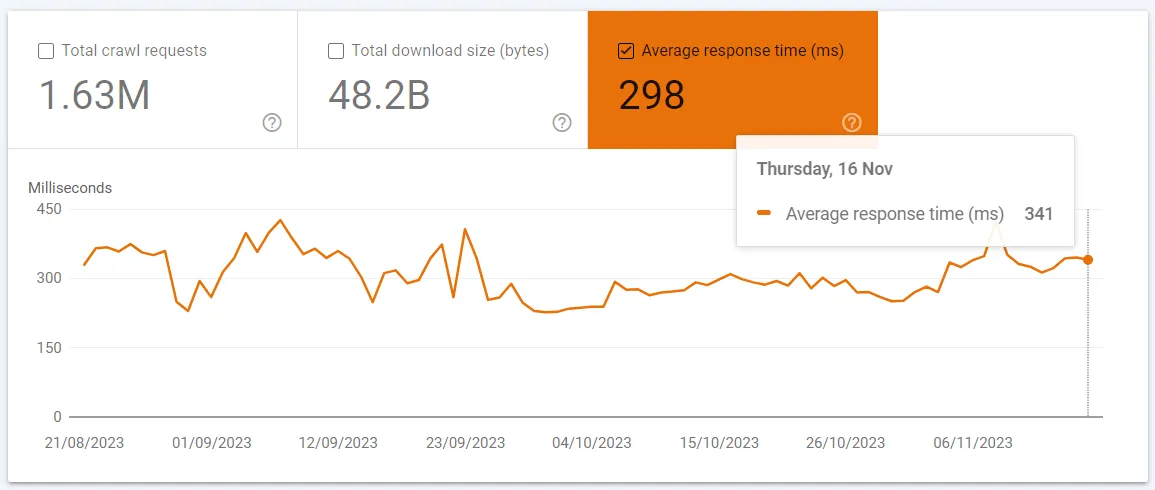
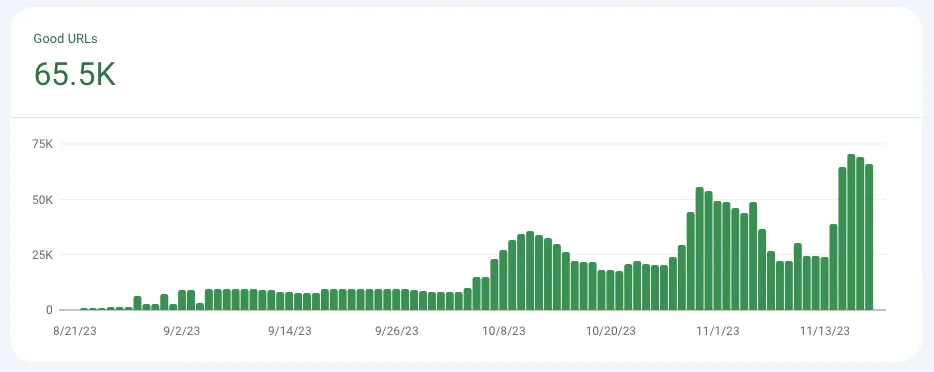
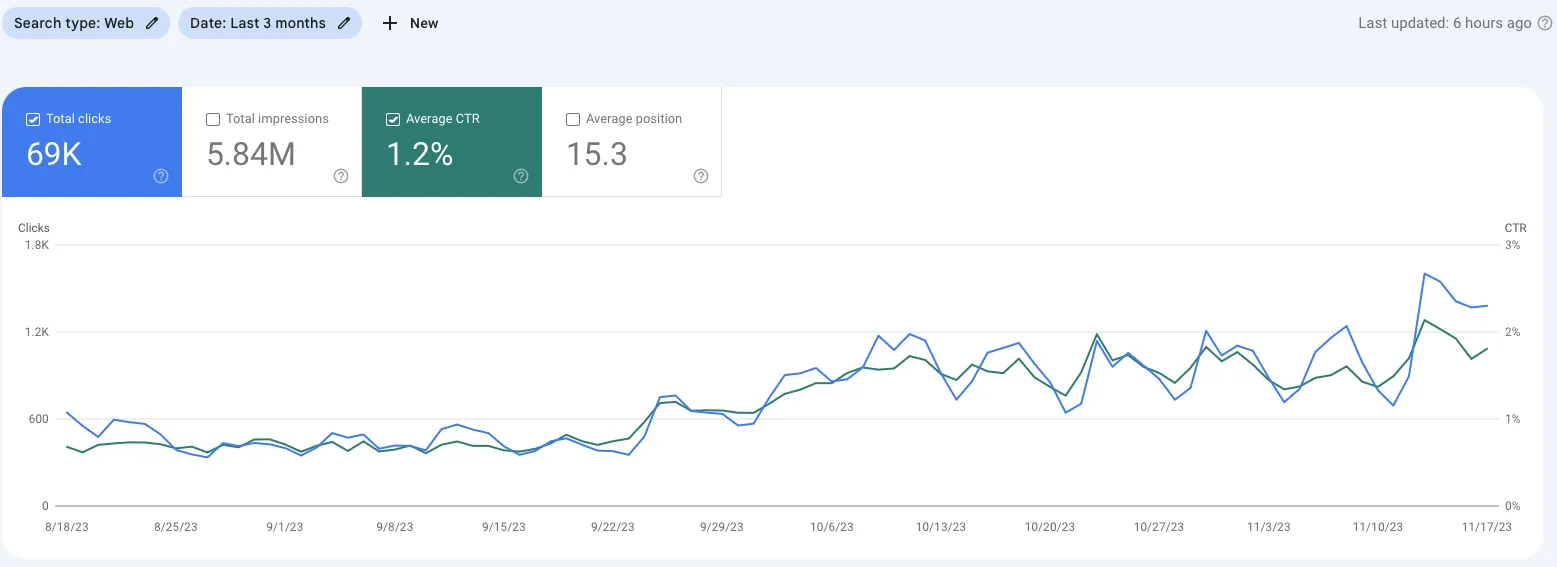
Search traffic rose twenty-one percent over the engagement, verified in Google Analytics. Time to First Byte reached below one hundred milliseconds in certain locations. Ninety percent of the previous Core Web Vitals failures were resolved, and search rankings followed a three-month upward trend. Performance, content, metadata and authority work ran together, so the contribution of any single intervention cannot be isolated.
Measured outcomes
Measured outcomes from the engagement.
The lasting difference
Durable structural change rather than a one-off improvement — which is what a client is actually buying.
- Layout-instability issues were addressed through responsive and front-end changes.
- Server response time was reduced, reaching below one hundred milliseconds in certain locations.
- Render-blocking resources were removed and below-fold assets deferred, so the browser reaches first paint sooner.
- Metadata and on-page elements describe the content accurately, making the platform's existing topical relevance legible again.
Capabilities used and related work
Have a system with a similar problem?
Tell us what it is doing. The diagnosis is usually the part that has been missing.