Build · 5 capabilities

AI engineering and automation

Most AI projects do not fail at the model. They fail at the engineering around it — reliability, evaluation, cost, and the decision about where human judgement belongs. That is the work we do.

Scope

Where AI actually pays

There are two categories of AI work that reliably produce value, and they are different problems. One is the engineering required to put a model into production without it becoming a liability. The other is automating operational work that is high-frequency and low-complexity, where the benefit comes from consistency rather than cleverness.

  • A prototype that works in a notebook is roughly twenty percent of the work of a system that runs in production. Evaluation, constrained outputs, failure handling and observability are the rest.
  • Cost per request that is negligible in testing becomes a design constraint at volume. It is far cheaper to design for it than to retrofit it.
  • The most common architectural mistake is automating the layer where human judgement was adding value, and leaving the repetitive layer manual.
  • Reliability expectations for AI features are higher than teams expect. A feature that is usually right reads to its user as a feature that cannot be relied on.
  • Where a claim about AI cannot be evidenced, we say so. The field has enough confident assertions in it already.
Capabilities

What AI Engineering & Automation covers

Each links to the full capability page — the problem it addresses, how we work, and the evidence behind it.

AI Engineering

AI engineering for systems that have to keep working

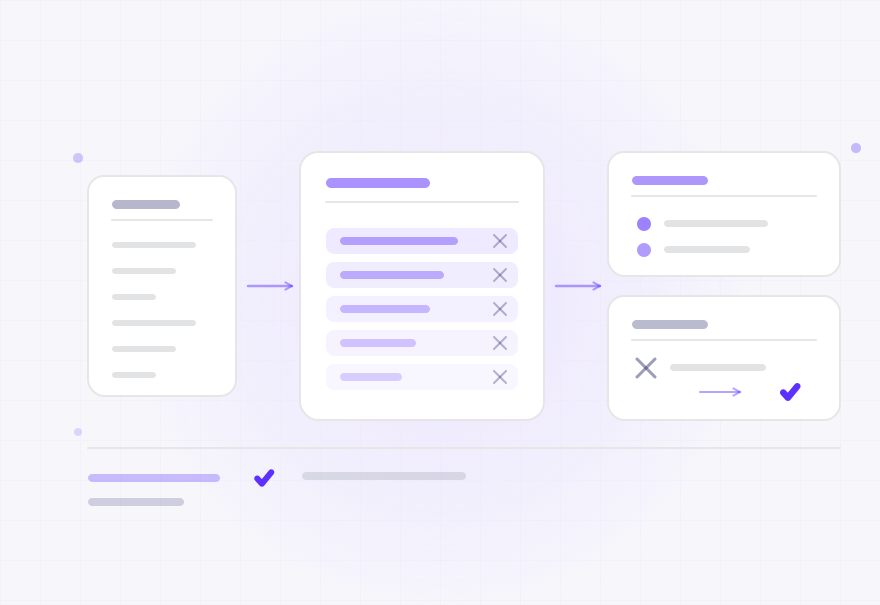
The gap between an AI demo and an AI system in production is mostly engineering: deterministic outputs, evaluation, failure handling, cost control and observability. That is the work.

7 capabilities1 case study
AI Engineering

AI agent engineering for systems that act, not just answer

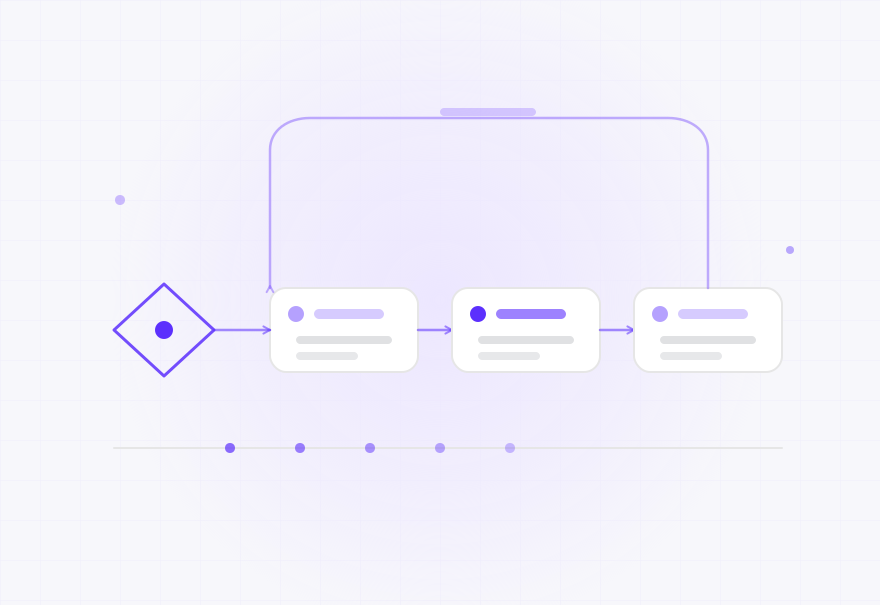
An agent is a loop with tools and consequences. The loop is the easy part. The hard parts are what it is allowed to touch, how it knows when to stop, and how you find out what it did when it goes wrong.

7 capabilitiesAdvisory
AI Engineering

AI assistants that know what they do not know

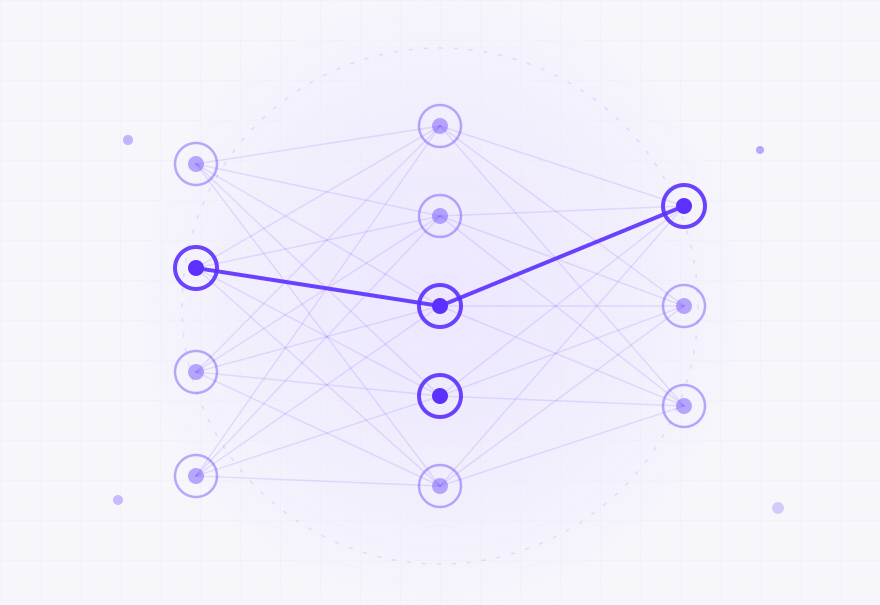
A chat demo answers questions well. An assistant in production has to answer from your actual content, hold a conversation across turns, recognise when it is out of its depth, and hand over cleanly. Most of that is not model work.

7 capabilitiesAdvisory
AI Engineering

Automating the work that should not need a person

High-volume operational work — publishing on a schedule, notifying thousands of subscribers, summarising what arrived overnight — is the most reliably valuable place to apply AI. The value comes from consistency, not from cleverness.

6 capabilities1 case study
AI Engineering

Notification systems that people do not switch off

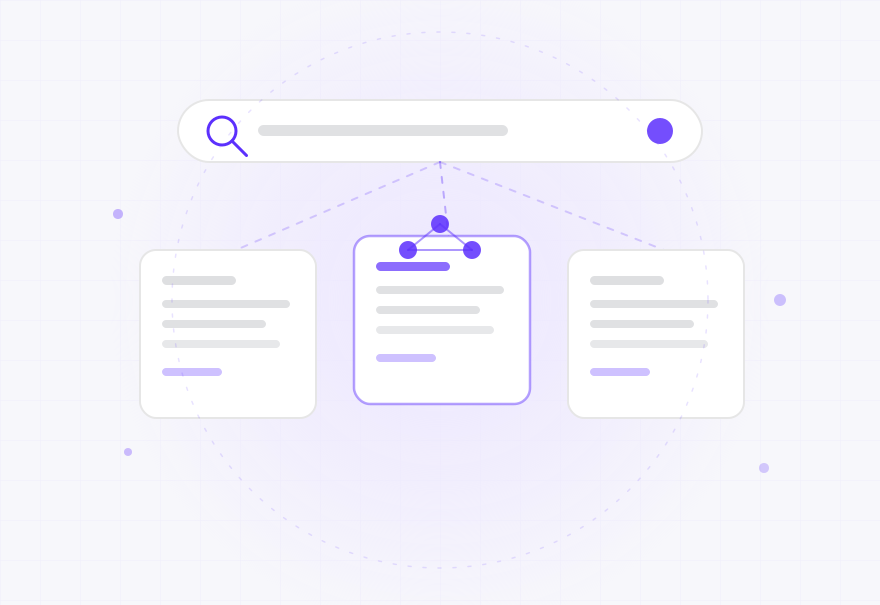
A notification system is judged by what it does not send. The model that decides what is interesting is the interesting part to build and the least of what determines whether the system is used.

8 capabilitiesAdvisory
Selected work

Engagements in this discipline

Work where this cluster was the substance of the engagement.

Education technology

AI social media automation

A four-week automated publishing engagement on Facebook. The objective was not to increase posting volume for its own sake but to establish whether consistent automated output could expand reach beyond the existing follower base. It did — and the mechanism by which it did was more interesting than the headline growth.

39.4Ktotal views, up 160.7%
Connected disciplines

Where this fits

The disciplines support each other. A platform that cannot stay up cannot be crawled reliably, and a search problem frequently turns out to be an infrastructure problem.

Not sure which of these you need?

Describe what the system is doing. Working out which discipline applies is part of the diagnosis, not something you should have to guess.